The Blog
Crusades · Templars · Hospitallers · Rome · Greece · Egypt
Passionate chronicler of the Middle Ages, the Renaissance and Classical Antiquity. Historical essays on the great themes of my novels.
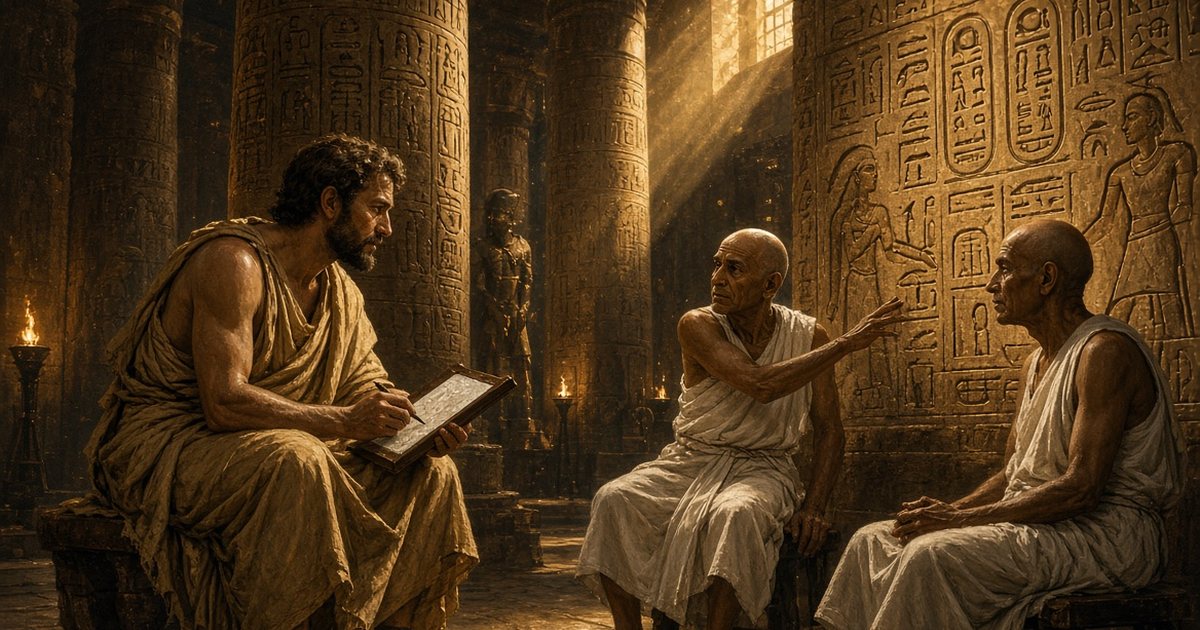
Herodotus's False Pharaohs: Who Each King Named in the Histories Really Was
When Herodotus visits Egypt around 450 BC, a century after the country fell under Persian rule, a group of priests recites him the complete list of their kings —Cheops, Rhampsinitus, Pheros, Proteus, Sesostris, Asychis— with names he transcribes phonetically into Greek exactly as he hears them. The result is a fascinating, uneven catalogue: ten identifications modern Egyptology considers certain, half a dozen reasoned but unproven proposals, a handful of kings who remain nameless... and a national superhero called Sesostris who is actually three different pharaohs fused into one. Here is the complete decoder, pharaoh by pharaoh, following the golden rule of always separating certainty from conjecture.
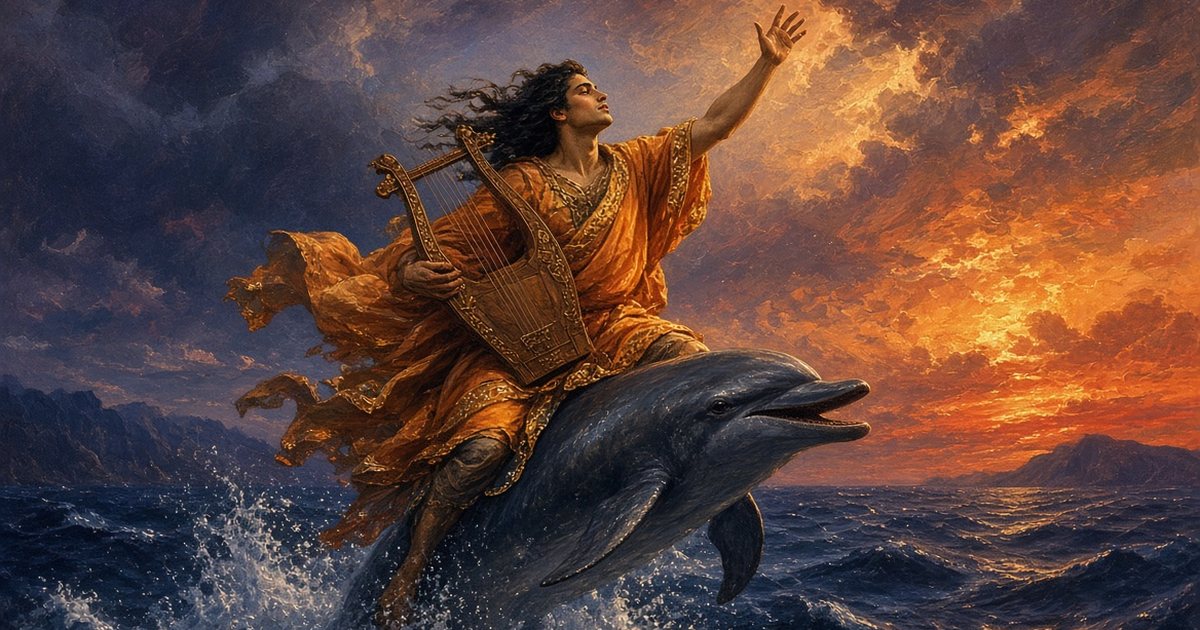
Arion and the Dolphin: History's First Rock Star and His Miraculous Rescue at Sea
Arion of Methymna was, in the 6th century BC, the most famous kitharode in all of Greece: he filled theatres, made a fortune on every tour, and counted the tyrant of Corinth as a personal friend. But returning home laden with gold after a triumphant tour of southern Italy, the crew of Corinthian sailors meant to bring him back safely decided that treasure was worth more than his life. This is the true story, documented by Herodotus, of how a farewell song and the providential arrival of a dolphin saved history's first rock star — and of the revenge, as brutal as it was poetic, that awaited his would-be killers.

Hugues de Payens: the man who founded the Templar Order
Around 1119, nine knights requested an audience with King Baldwin II of Jerusalem and put to him the strangest proposal a medieval monarch had ever heard: they wanted to become monks and keep the sword at the same time. Baldwin said yes. This is the real, documented story of the man who conceived the most powerful, richest and most mysterious religious order in the history of the West — a widower with a daughter, who knew exactly what he was giving up.

The bear that nearly killed Godfrey of Bouillon
20 August 1097, the Taurus mountains, in what is now central Turkey. A European duke who would very soon become the first King of Jerusalem lies flat on the ground, bleeding heavily from his back, a four-hundred-and-fifty-kilo beast reared up over him and about to finish him off. Against every odd, that day he beats death to the punch. But the real protagonist of this story, dear readers, is not the duke. Nor the bear. It is a man in a stained apron holding a barber’s blade…

The First Crusade of 1096: why it was inevitable
On 27 November 1095, in a field outside Clermont, Pope Urban II delivered a speech lasting less than an hour that unleashed two hundred years of holy war. But this isn't only the story of a sermon: it's the story of a Europe on the verge of exploding, and of eight centuries of Islamic expansion that already controlled almost all of Spain and threatened to swallow Constantinople whole. It's also the story of Peter the Hermit and his People's Crusade, of the Byzantine emperor Alexios I Komnenos — who asked for an escort and got an entire continent camped at his gates — and of his daughter Anna Komnene, the girl who would one day write the chronicle that lets us see the Crusade through other eyes.

Herodotus: father of history, or father of lies?
Cicero called him «Father of History». Four centuries later, Plutarch called him, with no anaesthetic, the «father of lies». Herodotus of Halicarnassus travelled through Greece, Egypt, Persia and the Black Sea, writing down everything he saw and everything he was told — including the incredible: flying serpents, giant ants, one-eyed peoples. But he almost always cites his sources, and archaeology has spent a century proving him right on details that once looked invented. My verdict, after years living alongside him: he never lied on purpose. He just mistranslated.

Pope Julius III and His Lover Innocenzo
In my book «Malta 1565: The Great Siege», beyond Grand Master Jean de La Valette, there appears another character of enormous importance, one of his commanders: fray Pietro del Monte, an Italian from Monte San Savino, admiral and commander of one of the Order's corsair galleys, nephew of a former Pope and future Grand Master of the Order of Saint John of Malta itself. Well, that Pope whose nephew — or to be precise, cousin — Pietro was, turned out to be Julius III, and his real family history hides one of the worst and most notorious homosexual scandals of sixteenth-century papal Rome.

Ramesses III: A Secondary Wife Killed Him Because Her Son Wasn't Next in Line for the Throne
In 1155 BC, Ramesses III was assassinated inside his own royal harem. It is the only assassination in Ancient Egypt for which we still have the complete trial record: names, titles, damning nicknames, and each conspirator's sentence. And in 2012, a 21st-century autopsy revealed what the papyrus never described: exactly how the king died.

Ramsay Bolton and his crimes: when reality outdoes fiction
Iwan Rheon, the great young Welsh actor, turned him into the number one, most hated SoB in the history of television: a sadist who tortures, castrates and kills without ever needing to raise his voice. But every cruelty you see on screen was already committed, eight hundred years earlier, by a real French nobleman — no script, no actor, and nobody shouting "cut" to save the victim.

Hitler and Emicho: the two worst antisemites in history
A medieval count convinced he had been chosen by God orders the massacre of thousands of Jews on the Rhine. Eight hundred years later, another man builds the very same script in the very same corner of Europe. Only eight hundred years separate them, 1096-1933. Everything else — the land, the language, the culture, and the divine mission they believed they had — they shared. Down to the final cowardice.

Massagetae and Nasamones: the sexual customs that shocked Greece
Herodotus says that among the Massagetae, a man only had to hang his quiver of arrows on a woman's wagon to have sex with her, no permission needed from anyone. The Nasamones, in the Libyan desert, went even further: on a man's wedding night, the bride had to sleep with every guest, one by one, before the marriage was considered complete.

Sacred Prostitution in Babylon, According to Herodotus
Every woman born in Babylon had to sit, at least once in her life, in the temple of the goddess of love Mylitta and give herself carnally to the first stranger who tossed a coin into her lap. It didn't matter who the man was or what coin he threw. Gold, silver, or copper. The most beautiful and desired women fulfilled this strange ritual in a day. The ugly ones, or those with some disability or mental impairment, took up to four years.

Did you know that an Italian, a Calabrian from Le Castella, became king of Algiers and Tunis, in Africa?
Captured at seventeen, he rowed in chains on Turkish galleys. One slap made him renounce his Christian faith — and he ended up Ottoman Grand Admiral. This is the story of Giovanni Dionigi Galeni, the boy from Le Castella who was headed for the friary, survived the oar, saved what was left of the sultan’s fleet at Lepanto and rebuilt the entire Turkish navy in under a year.

Do you want to know who inspired the character of Ramsay Bolton in Game of Thrones?
He was not dreamed up by screenwriters with too much imagination. He truly existed, his name was Thomas of Marle and Coucy, and for twenty years he turned northern France into a private slaughterhouse. He hung his prisoners by the testicles until the weight of their own bodies tore them off, and sometimes he did it with his own hands. An abbot who lived in his shadow called him the most wicked man of his generation. This is his story.

Did Mark Antony and Cleopatra really kill themselves together?
Or did she die nine days later, right under the nose of the future Roman emperor, Octavian? We all have the scene burned into our minds: the two lovers dead, locked in an embrace inside the mausoleum of Alexandria, the snake slithering nearby, the shared poison and the great love that reaches beyond death. Well, no. It did not happen like that. And the real truth, the minute-by-minute one, is infinitely better than the Hollywood fiction: nine days in which she was still alive, negotiating, a prisoner of the man who had just destroyed them both.

Did they poison Godfrey of Bouillon? The last lunch of the first king of Jerusalem
Summer of 1100. The man who had conquered Jerusalem, the first Christian sovereign of the Holy City, sits down to eat in a palace by the sea, on the coast of Palestine. A few hours later he begins to die, amid high fevers and atrocious pains, and no one will ever know for certain why. A sudden illness… or a transparent poison, sprinkled over his favourite dessert by a hired killer in the pay of an ambitious archbishop? Come with me, dear readers, to reconstruct one of the best-disguised crimes of the Middle Ages: the last lunch of King Godfrey of Jerusalem.

Jean de la Valette: the iron grandfather who saved Malta and Europe from the clutches of Islam
At seventy-one, the Grand Master of the Hospitallers stood up to the mightiest empire of the age, the Ottoman, with a handful of knights and civilians, and did not yield a single inch · Malta, 1565

After Baldwin IV: the boy king who inherited Jerusalem and died at nine
Acre, summer 1186. A nine-year-old boy dies in a castle by the sea, and with him dies the crusader kingdom's last chance. This is the story of Baldwin V, the king who never got to reign.

Lepanto 1571 — Christians vs. Muslims: the great naval battle that decided the fate of Europe and the mastery of the Mediterranean
Six years after Malta said no, four hundred ships hurled themselves at one another in a Greek gulf to settle once and for all who ruled the Mediterranean

Friday 13 October 1307: the day France destroyed the Templars
At six in the morning thousands of red wax seals were broken at once and the most powerful order in Christendom was annihilated in a single day: not by the Saracen sword, but by paper and pen

The Assassins (Hashshashin): the sect of the Old Man of the Mountain that terrorized kings and sultans
A secret order perched on impregnable high-mountain fortresses, whose members killed their victims in broad daylight without fearing death. From their name comes our word "assassin" and the video game Assassin's Creed · 11th–13th centuries

Zoroaster and the religion of fire: the faith that invented the eternal struggle of good against evil
Long before Christianity and Islam ever appeared on this planet, a Persian religion was already speaking of a benevolent god of light, of an evil spirit of darkness, of the day of final judgement and of paradise for those who had earned it · here you will find out what the faith of the Persian kings who fought Greece was really like

Fort St Elmo: 31 days that saved Europe
Summer of 1565: a few hundred Christians hold Fort St Elmo for 31 days against the Ottoman army. The fall that saved Malta — and half of Europe.

Saladin: an enemy so noble that even the crusaders admired him
The sultan who retook Jerusalem and spared the lives of many of his enemies (except for one bastard named Reynald of Châtillon). The same man who earned a place of honour even in the legends of his Christian adversaries: the Crusades, 12th century.

Baldwin IV: the leper king who defeated Saladin
Crowned at 13 and a leper since childhood, he defeated Saladin at Montgisard aged just 16 and ruled a kingdom at war while his body fell apart. The most heroic —and tragic— life of all the Crusades, and how his sister Sibylla and the inept Guy de Lusignan lost it all at Hattin.

Peter the Hermit: the mystic preaching monk who dragged half of Europe to the Holy Land
A gaunt, dishevelled monk with deep, tormented eyes, a white beard and a thundering voice, who went from village to village riding a tiny, ancient donkey, set in motion—with nothing but his apocalyptic words—the greatest mass movement of the Middle Ages: the Crusades.

Croesus of Lydia: the richest and most capricious king of the ancient world (and his fall onto the pyre)
The richest man of the ancient world, bound to a bonfire? Wise Solon warned him, the Delphi oracle tricked him, and Cyrus beat him with… camels. The fall of Croesus, by Herodotus.

Candaules of Lydia: the first documented pervert in history
680 B.C. A king obsessed with his wife's beauty showed her naked to the wrong friend. He lost the crown, the dynasty and his throat.

Dogs die in war too: Nuvola Bianca and the firing squad of five rifles
On 28 May 1565, La Valette ordered all the dogs of besieged Malta killed. The story of Nuvola Bianca and the firing squad of five rifles with a single bullet.

Pets in Antiquity: 25 centuries loving our dogs and cats
Think loving the family dog is modern? Egypt, Greece and Rome already wept for their pets. The epitaph of the dog Patricus will melt your heart.

Caesar and Nicomedes: Rome's most famous gay story (or the first gold-digging in history?)
Rome's greatest womaniser carried all his life a single rumour about his manhood: King Nicomedes of Bithynia. His legionaries' ditty, Roman sexual morality and a malicious hypothesis about the young Caesar.

When pirates kidnapped Julius Caesar (and lived to regret it very briefly)
A very young Julius Caesar was kidnapped by pirates, demanded they raise his ransom, promised to crucify them between laughs… and kept his word. Antiquity's most revealing anecdote, per Plutarch and Suetonius.

Emicho of the Rhineland: the count who massacred thousands of Jews in 1096
In 1096, before the First Crusade reached the Holy Land, Count Emicho of the Rhineland led one of the largest massacres of Jews in European history. The true story, and the bishops who tried to stop it.

What if Helen of Troy never actually set foot in Troy?
The priests of Memphis told Herodotus that the Trojan War was a colossal fraud: Helen never set foot in Troy, she was in Egypt, and the Greeks knew it two months after she fled.

Adrastus: the unluckiest jinx in all of history
In the first book of Herodotus lives Adrastus, a man so deeply jinxed that his mere presence was enough to unleash disaster. His story, at the court of King Croesus, is at once the most comic and the most tragic of antiquity.

The Eight Crusades: why they were inevitable
From Peter the Hermit to the fall of Acre: why each crusade called for the next.

When Europe was saved on an island: the Great Siege of Malta
In the summer of 1565, on a barren island of barely 316 km² in the centre of the Mediterranean, a few hundred Christian knights stopped the greatest army of the Ottoman Empire. The siege that decided the fate of Europe.

Mathurin de Romegas and his capuchin monkey: the luckiest pirate of the Mediterranean
Malta, 1554. A French captain survives beneath the flooded hull of his capsized galley, breathing the last bubble of air with his capuchin monkey. Ten years later, a single act of piracy triggered the Great Siege of Malta of 1565.

Cyrus the Great: the shepherdess Spakó who saved the future king of Persia
Year 599 BC. An illiterate shepherdess whose name meant «She-Wolf» saved the future founder of the Persian Empire with a brilliant idea. The story behind the legend of the wolf that suckled Cyrus the Great.

Did you know why Friday the 13th brings such bad luck? The Templars' curse
Paris, dawn of 13 October 1307. Philip IV's soldiers storm the commanderies of the Order of the Temple. Before dying at the stake seven years later, Jacques de Molay curses the king and the pope. Seven centuries on, Europe still fears Friday the 13th.