When Herodotus of Halicarnassus arrived in Egypt around 450 BC, the country already had more than three thousand years of documented history. The pyramids of Giza had been standing for twenty-one centuries. Tutankhamun had been dead for nine hundred years. For the Greek, it was as if we were visiting a civilization that flourished before the Rome of the Tarquins.
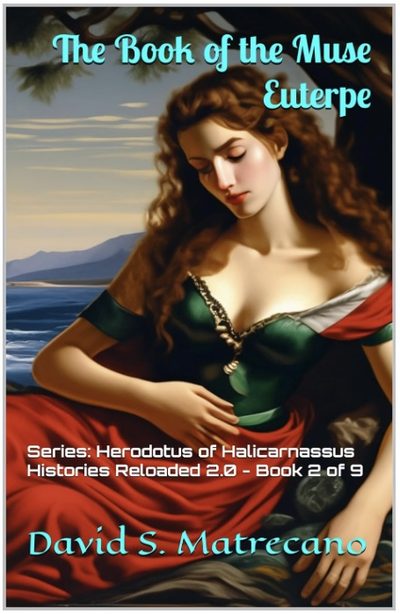
The second book of the Herodotean Histories, which in the original work bears the subtitle "Euterpe", is entirely devoted to Egypt. It is the longest of the nine, the richest in ethnographic details and the most surprising. Herodotus describes the Nile, the pyramids, the temples, the customs, the gods, the sacred animals, the funerary rituals, the pharaonic dynasties. He notes everything he sees and everything he is told —by priests, interpreters, Greek merchants of Naucratis—, always distinguishing what he has seen with his own eyes from what he has heard at second hand.
Twenty-five centuries later, this second book remains the main source on how 5th-century Greeks saw late pharaonic Egypt. Modern Egyptologists —Champollion, Mariette, Maspero, Petrie, Hawass— have corrected and nuanced many of his data, but Herodotus's original gaze remains irreplaceable.
David S. Matrecano, Italian historian and novelist based in Ibiza, devotes the second volume of his Herodotus Reloaded 2.0 saga to this extraordinary journey. Through a "contextual modernization", he takes the original text of the Halicarnassian, organizes it by themes accessible to the contemporary reader, and enriches it with the findings of modern Egyptology —from the Rosetta Stone of Champollion to the discovery of Tutankhamun's tomb by Howard Carter, via the most recent excavations by Zahi Hawass— without ever losing the original voice of the first tourist in history.
If you are passionate about Ancient Egypt and have read books like Mika Waltari's The Egyptian or Christian Jacq's novels, this book will give you the real historical basis on which all those fictions are built. If you have never approached the country of the pharaohs, you will discover here a world of pyramids, animal-headed gods, initiated priests and mummified queens that has fed the imagination of the West for two thousand five hundred years. Absolute historical rigor. Adventure impossible to put down.